
Research
Pressure to Fly and Phase of Flight Analysis in Helicopter Air Ambulance Accidents
Air Medical Journal, 2026
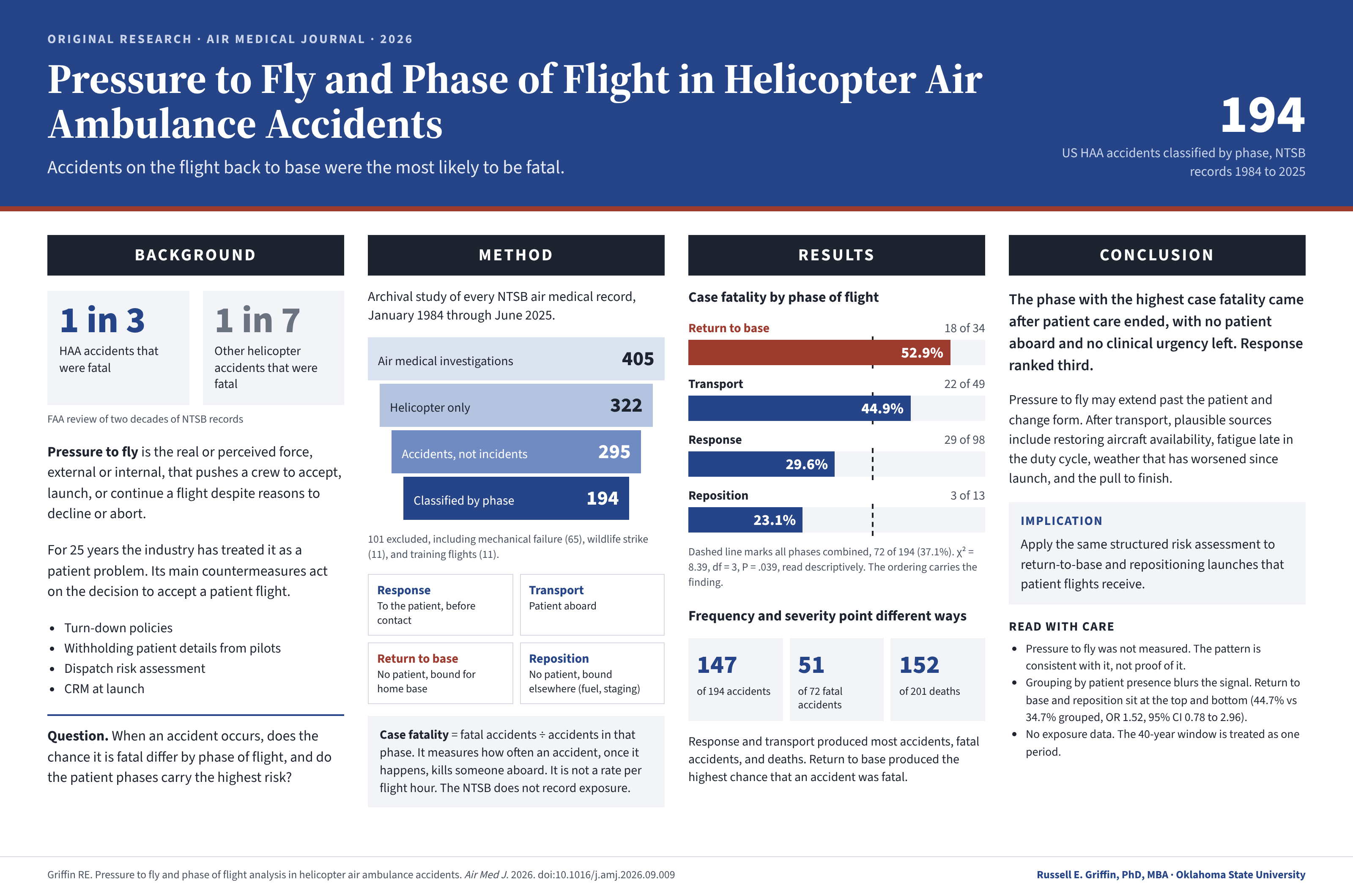
Pressure to fly is usually discussed in terms of flights that involve a patient. This study reviewed US helicopter air ambulance accidents in National Transportation Safety Board records from January 1984 through June 2025 and classified 194 of them by phase of flight: responding, transporting, repositioning, or returning to base. Return-to-base flights had the highest share of accidents involving at least one death (52.9%), followed by transport (44.9%), response (29.6%), and repositioning (23.1%), while response and transport accounted for most accidents and deaths. The findings suggest that pressure to fly may extend beyond patient flights and that every phase of the operation warrants safety attention.
Hear about new research
Occasional email about new studies, talks, and practical tools. A few times a year.